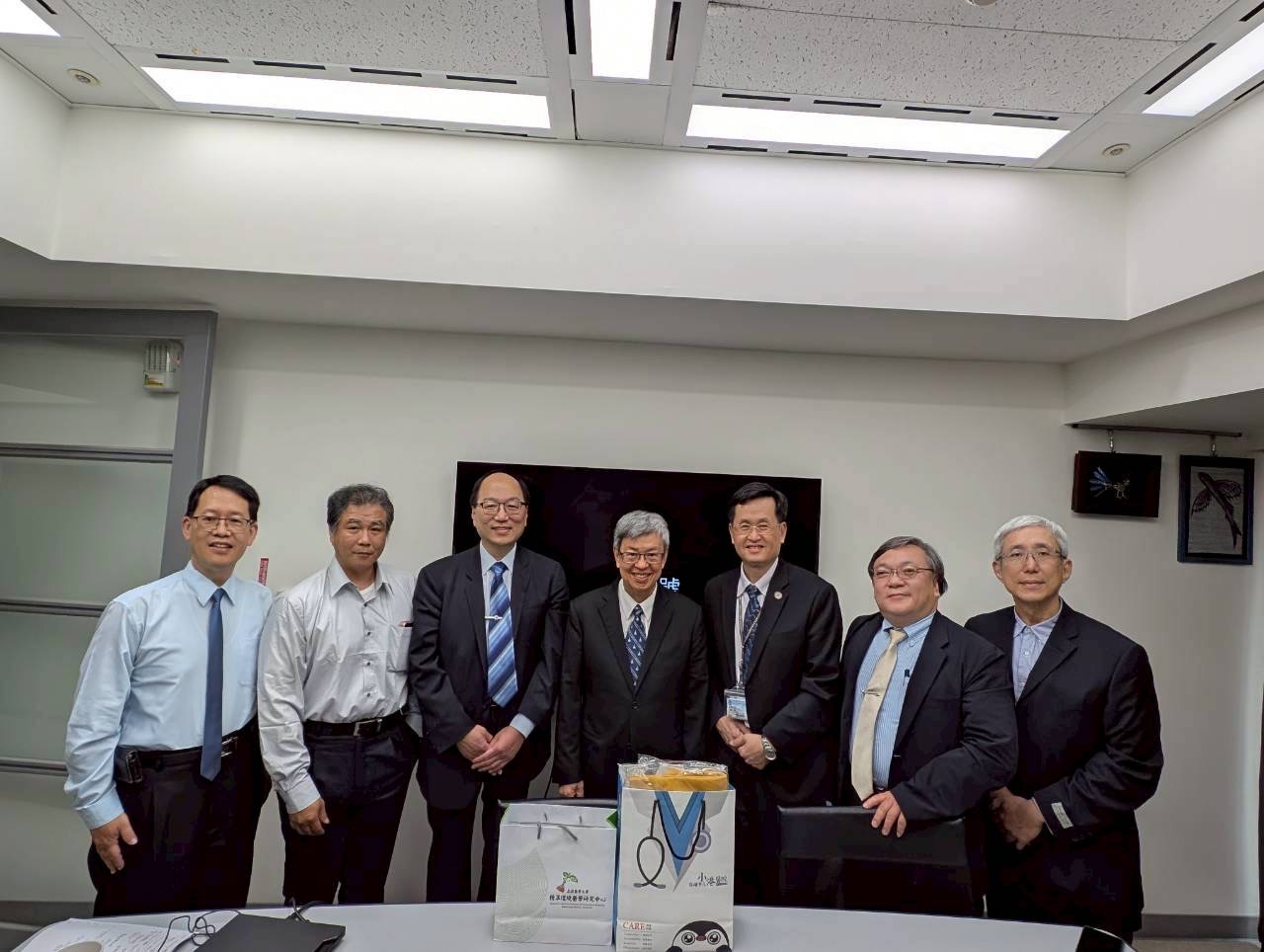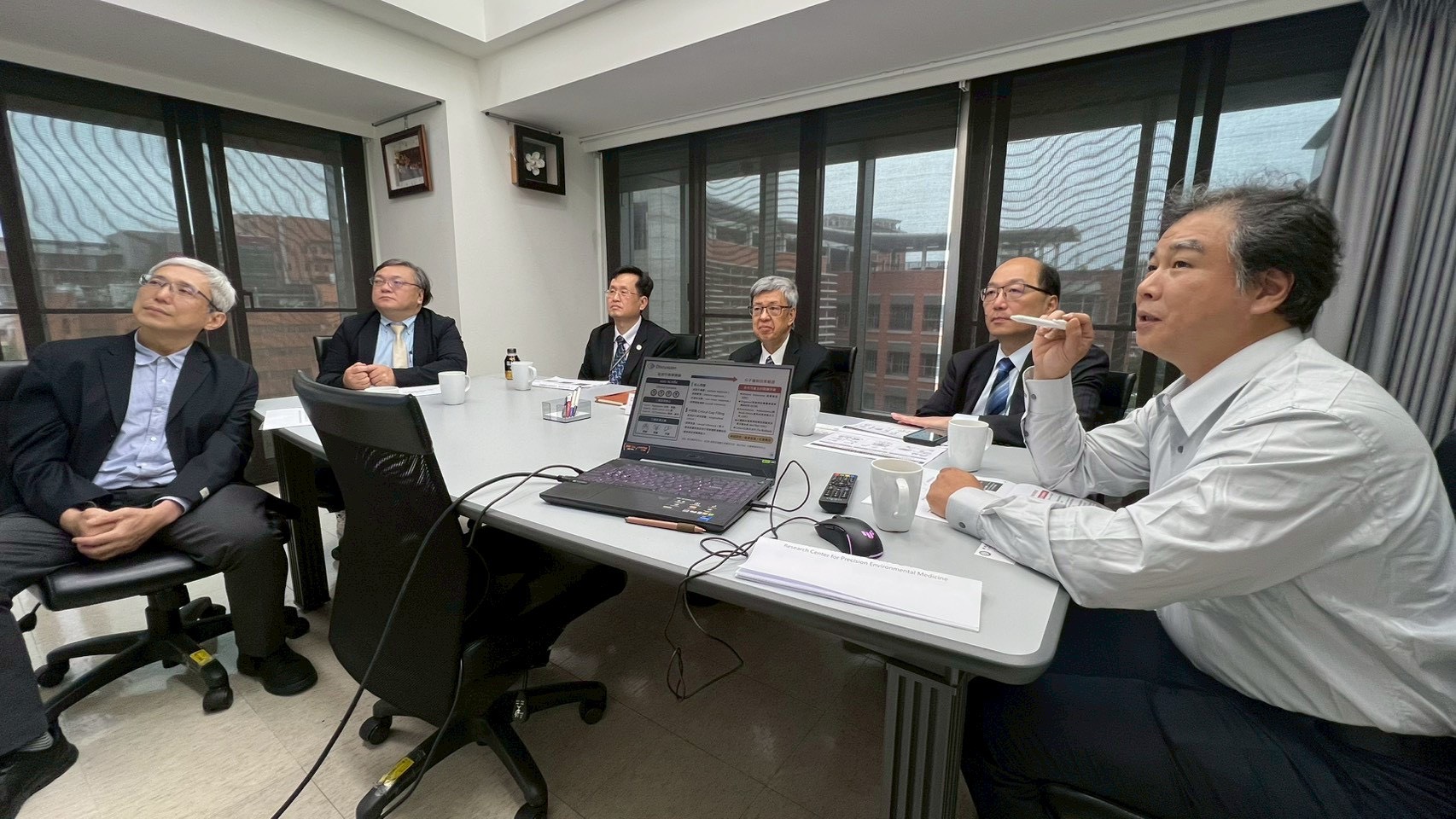
The Precision Environmental Medicine Research Center and the Department of Biotechnology at Kaohsiung Medical University visited the Genomics Research Center of Academia Sinica on April 30, 2026, under the framework of One Health. The purpose of the visit was to seek academic consultation from Academician Chen Chien-jen regarding research strategies on health risks associated with environmental exposure and biomedical research development.
Director Hung Chih-Hsing of the Precision Environmental Medicine Research Center presented the center’s research themes and directions, focusing on the integration of multi-exposure assessment and multi-organ changes following exposure. In response, Academician Chen used examples such as lung cancer and hepatic disease to illustrate that environmental exposures may affect multiple organ systems. He emphasized that exposure is a critical determinant of disease risk and that further investigation into its underlying biological mechanisms is essential. Such an integrative research approach is applicable to studies of diseases involving the lung, liver, kidney, and other organs.
The Academician further stressed that research design should incorporate a longitudinal perspective, integrating repeated measures and time-related factors, rather than relying solely on single time-point data analysis. Studies should be capable of reflecting the dynamic relationship between exposure and disease progression over time, while also accounting for behavioral changes such as smoking status that may influence outcomes.
During the meeting, Assistant Professor Wei-Ting Liao from the Department of Biotechnology raised issues regarding the establishment of causal relationships in multi-omics research and the challenges of advanced integrative statistical analysis. Academician Chen suggested considering statistical support and comprehensive data analysis planning to facilitate support from Academia Sinica in longitudinal study design and predictive model development, thereby ensuring the reliability and interpretability of analytical results. He also recommended adopting a cohort study design as the primary framework, supplemented by a nested case-control approach to balance research depth and analytical efficiency.
Overall, the Academician advised that the research should move beyond single-exposure and cross-sectional analyses toward a time-axis-based longitudinal design. This should integrate multi-exposure and multi-omics data, and evolve from association analyses toward predictive modeling and mechanistic exploration. In addition, combining clinically driven research questions with international collaborative frameworks would further enhance the depth and translational value of studies related to lung, liver, and kidney diseases.
This visit was highly beneficial in broadening our academic vision and perspective. The team will further consider the feasibility of inviting Academician Chen to Kaohsiung Medical University for future academic exchange and in-depth discussions.